Root - EN
Availability: immediately
In stock: > 10 pcs
Warranty period: 24 month
Price with VAT: 52.50 €
Product description
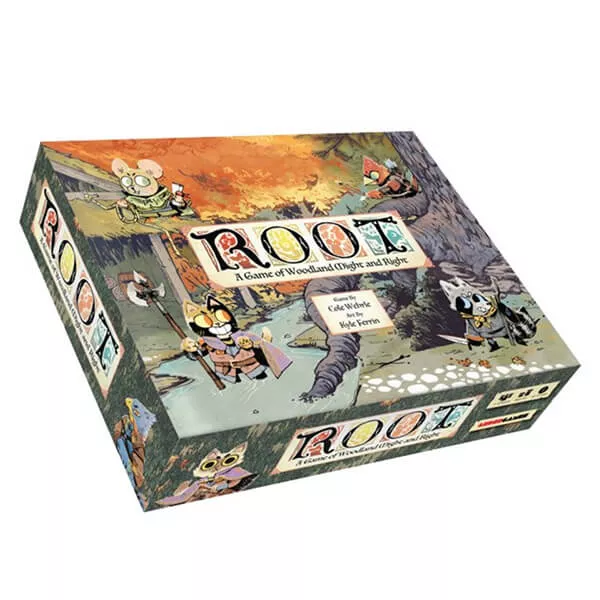
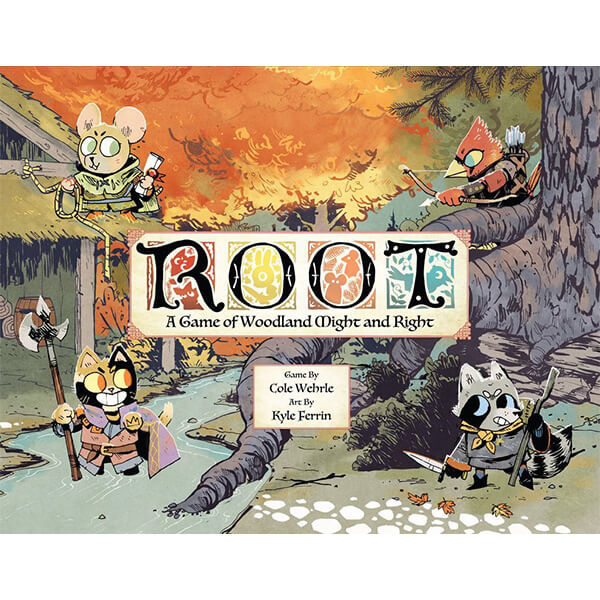
The popular strategic fantasy board game ROOT in English. Take the lead of one of the forest factions and gain control of the forest realm.
It is a fantasy in which animals are given human abilities while their characteristics make the game asymmetrical. The animals use medieval tools and weapons to try to dominate as many forest clearings as possible. EACH player controls one of the forest factions: the cats led by the Marquess of the Cat, the Eagle's Nest Clan, the Forest Alliance, and the Rogue.
The Root game in English includes:
- Law of the Forest Realm (rules in English)
- Gameplay tutorial (tutorial rules in English)
- Game Plan (Game Plan)
- 4 player boards
- 56 warrior pieces for each faction
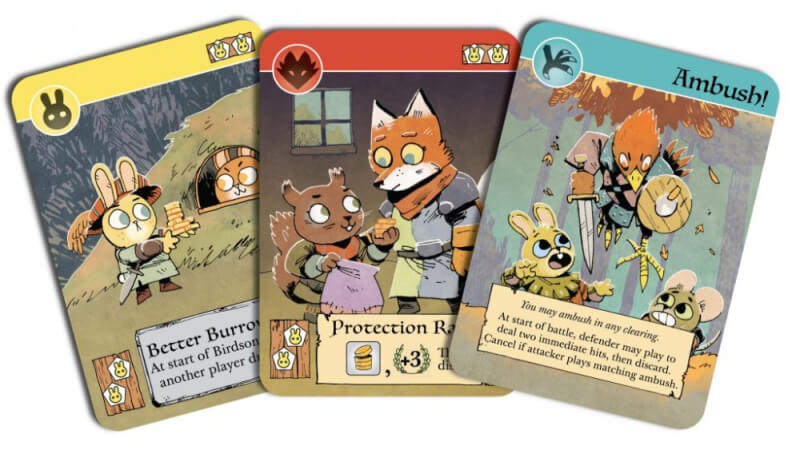
- 98 cards
- 93 tokens
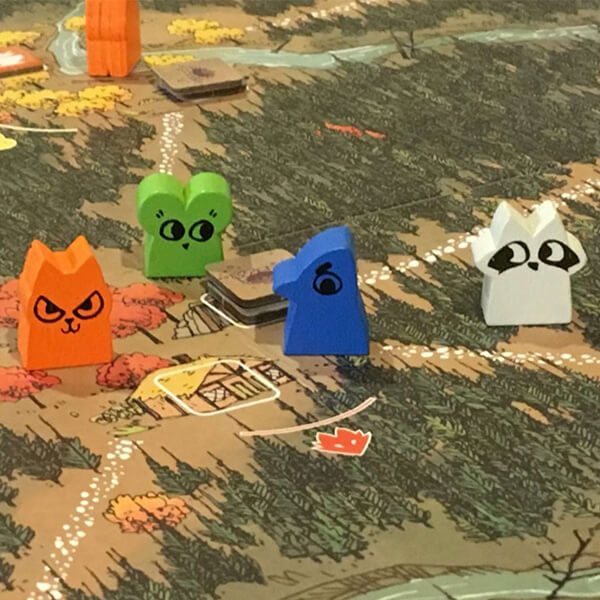
Game Preparation: At the start, each player chooses his faction, sits in order on the other side of the player board, and receives player board, components, pieces and cards (five cards each), 4 ruins to be placed on the map for the rogue to explore. They then place the components of each faction on the player board and place them in the exact order on the other side of the player board.
Game flow: the game is started by a randomly selected player and alternated in rounds until one of the factions reaches 30 points. Each has several universal rules, such as the principle of moving between clearings, paying cards, fighting, and gaining victory points. Each player's round has three phases: dawn, daylight and evening.
- Cats are the most numerous faction at the beginning and control almost the entire forest. Their intention is to mine wood and use it to build new structures in the clearings they control. At dawn, they place a wood token on each of their saws. Then, during the daylight hours, they may first use their constructed workshops to produce cards from their hand, and then they may take 3 of the following actions: Battle; March - they make two moves; Recruit - they recruit an additional warrior at each recruiter's location; Build - from their gainedwood gained can be used to build more sawmills, workshops or recruiter residences; overtime - more wood is gained in the sawmills, but it costs a card from your hand. In the evening, the cats draw cards from the deck into their hand - the amount of cards is based on the number of structures built. Cats earn victory points for each building they build.
- Playing as Eagles requires consistent planning ahead! This is because at dawn, the Eagles place cards with the Glade symbol in the leader's yields. There are four yields, and the Eagle player performs them sequentially during the daylight hours: recruit, move, battle, and build. The eagles can only use the yield where the card is, and only in a clearing that matches the card's character. At the same time, however, they must use these yields! If they don't, it turns out that their leader planned everything wrong, the eagles fall into chaos, lose some of their victory points and need to recall their leader, elect a new one and start planning the yields all over again. In the evening, the Eagles player catches up with his cards and gains victory points - both of which affect the number of rooks built.
- Forest Alliance At the start of the game, the Forest Alliance animals have no component on the game board. They are rebels and rebellion fighters trying to gain the sympathy of the forest dwellers. At dawn, the forest alliance spreads sympathy. It uses followers to do this, who must be the same colour as the clearing where they want to spread sympathy. One follower card is enough for the first three sympathies, and a higher number of followers is required from the fourth sympathy onwards. During the dawn, a rebellion can still be played, during which the sympathizer creates a base in the sympathy clearing, adds warriors and one officer. All this costs him two follower cards of the same suit as the corresponding clearing. During the White Day phase, the Forest Alliance has the option to play actions: production - making items from cards in hand using sympathies in the appropriate clearings; mobilization - adding cards from your hand to your follower deck; and during training, promote one warrior to officer at your base (again using a card from your hand). In the evening, the forest alliance performs actions such as movement, combat, recruitment and agitation - further spreading sympathy in the forest. They can perform as many actions as they have officers. Eventually, they take cards into their hand. Victory points are awarded to the alliance for spreading sympathy, each token placed on the map generates a number of points for you.
- The rogue roams the forest, cooperating with all factions, but can also fight those that are hostile to him. The rogue is a very powerful ally, but can also be a dangerous enemy. He performs his actions using crafted items, which he can acquire by trading with other factions. If the Rogue gets into a fight and takes a hit, his items are damaged. The rogue cannot be wounded (or killed) in any other way. The Rogue earns victory points primarily by destroying the game components of his enemies and improving relations with friendly factions. Making a faction your ally is very advantageous for both sides, they can enjoy many bonuses during the game. During dawn, the rogue restores (rotates) his used items and can also sneak, which is his special movement across the map between clearings. In broad daylight, the rogue can use his items to perform the following actions: movement; battle, exploration - searching for items in ruins on the map; assistance - the rogue passes them to another playera card from his hand and takes an item from him; task - the rogue performs a task from a card; shot - shooting one opposing warrior or destroying one structure; repair - repairing a damaged item; liftcrafting - producing items from cards in hand; and finally, a special action, which is different for each rogue. In the evening, the rogue can rest - while moving damaged items to his satchel. Next, he recharges the cards in his hand and finally he must check the number of objects he is carrying and if the number is over the limit, some objects must be discarded.